Are Micromarkets Replacing Traditional Vending Machines? Industry Trends Explained
Meta Title:
Micromarkets replace vending machines, generating 65-70% higher sales and 30-50% more revenue per location. West Coast adoption surged 35% since 2022, driven by fresh food options and premium items in offices. Businesses gain employee satisfaction, modern aesthetics, and no-cost installs via revenue sharing. Ideal for 150+ person sites in secure Eugene spaces, boosting workplace culture.
Tired of traditional vending machines that limit choices, frustrate users, and deliver lackluster revenue in your office or apartment complex? Many Eugene businesses face declining sales as employees demand fresher, grab-and-go options. This article uncovers if micromarkets are truly replacing vending machines, with West Coast adoption rates surging 35% since 2022.
Introduction: The Shift from Vending Machines to Micromarkets
Walk into a modern office breakroom in 2025, and you likely won't see a lonely machine dispensing chips with a metal coil. Instead, you'll find an open-concept market that looks more like a boutique convenience store. This shift isn't just about aesthetics; it is a fundamental change in how businesses handle workplace refreshments.
The traditional vending machine had a good run, but employee expectations have evolved. People want fresh salads, artisan sandwiches, and premium beverages, not just shelf-stable candy bars. This demand has fueled the rapid rise of the micromarket.
What Are Traditional Vending Machines?
We all know them. These are the standalone, automated retail units that dispense items—usually snacks and beverages—after you insert cash or a card. They rely on a mechanical process, often using coils or gravity-fed systems to drop a product into a retrieval bin.
Here is what defines them:
Compact footprint: They fit in narrow hallways or small corners.
Limited selection: Inventory is restricted by the number of coils or slots.
Mechanical security: Products are locked behind glass until purchased.
While reliable, they are rigid. If a salad doesn't fit in the coil, you can't sell it. This limitation is exactly what newer solutions aim to fix.
What Are Micromarkets?
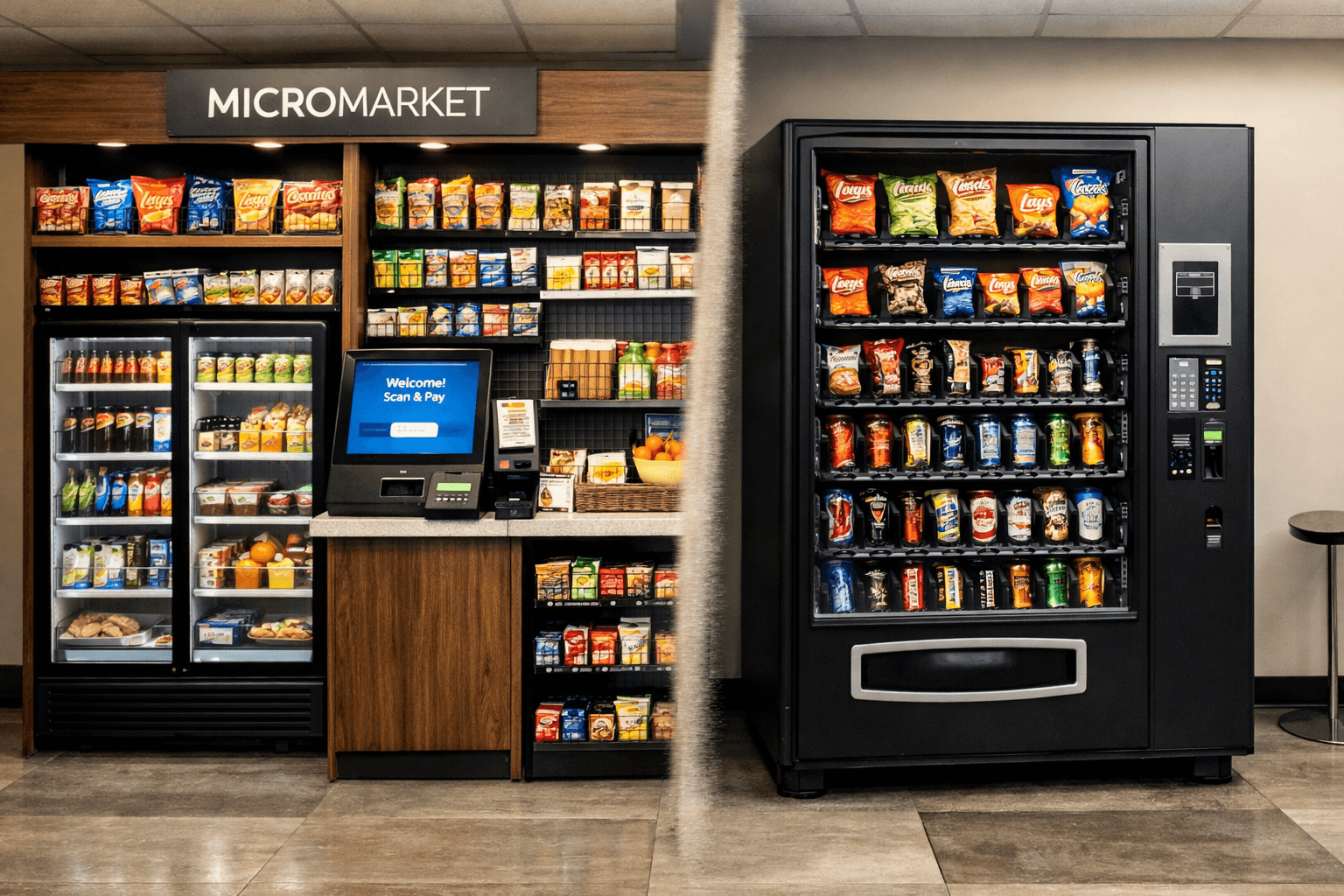
Think of a micromarket as an unattended retail environment located directly inside a secure building. Instead of locking food behind glass, products are displayed on open racks, shelves, and in glass-front coolers. It feels less like a machine and more like a mini-mart.
The setup usually includes:
Open shelving and coolers: Customers can pick up products, read nutrition labels, and check freshness before buying.
Self-service kiosks: A central tablet or terminal handles the transaction.
Expanded variety: Because there are no mechanical slots, you can stock fresh fruit, yogurt, meal kits, and odd-shaped beverages.
This open approach relies on a concept called "honor-system merchandising," though modern security cameras ensure that honor is maintained.
Industry Trends: Are Micromarkets Truly Replacing Vending?
The short answer is yes, but with a caveat. Micromarkets are aggressively replacing vending banks in locations that can support them, specifically sites with 150 or more people. The economics are simply too strong to ignore for both operators and facility managers.
Data shows that micro markets generate 65-70% more sales than traditional vending machines. This revenue jump happens because customers buy more items at once—like a drink and a sandwich—rather than a single snack. However, vending machines still hold their ground in public, high-traffic, or transient areas where security is difficult to manage.
Adoption Rates and Market Share Growth
The growth here is explosive. In 2025, we are seeing a massive retrofit movement where old breakrooms are being gutted to make way for markets. The driving force is the average transaction value.
In a vending machine, a transaction is usually under $2.00. In a micromarket, because people are buying lunch or breakfast rather than just a snack, that average ticket price jumps significantly. Operators are reporting 30–50% higher sales per location, making the return on investment for the equipment much faster, despite the higher upfront setup effort.
Regional Insights from the US West Coast
The shift is most visible in tech-heavy regions and major metropolitan hubs. On the West Coast, specifically, the "amenity war" between companies to attract talent has made micromarkets a baseline expectation rather than a perk.
In these areas, a simple soda machine signals a dated company culture. Businesses are using high-end micromarkets stocked with local kombucha, cold brew, and organic meals to signal that they care about employee wellness. While the trend started in tech, it has moved into manufacturing, logistics, and multi-tenant apartment complexes across the country.
Why Businesses Are Switching to Micromarkets
Companies aren't just switching because it looks cool. They are doing it because it solves specific workplace problems. A well-stocked market keeps employees on-site during breaks, which can boost collaboration and save time.
Here is why the switch is happening:
Employee Satisfaction: Access to fresh, healthy food is a top-requested perk.
Modern Aesthetics: It transforms a sad breakroom into an inviting social hub.
No Cost to Client: Many providers, including Modern Amenities, install and manage these systems for free on a revenue-share basis.
It turns a utility (getting a snack) into a genuine amenity that adds value to the property.
How Micromarkets Work in Commercial Spaces
The process is designed to be frictionless. In a commercial space like an office or apartment lobby, the market runs autonomously. There is no cashier, and the lights are always on.
Here is the typical flow:
Browse: Customers walk up to the open shelves or coolers.
Select: They physically pick up the items they want.
Scan: They scan the barcodes at the self-checkout kiosk.
Pay: They pay using a credit card, mobile wallet, or a dedicated market account.
Core Technology and Self-Checkout Systems
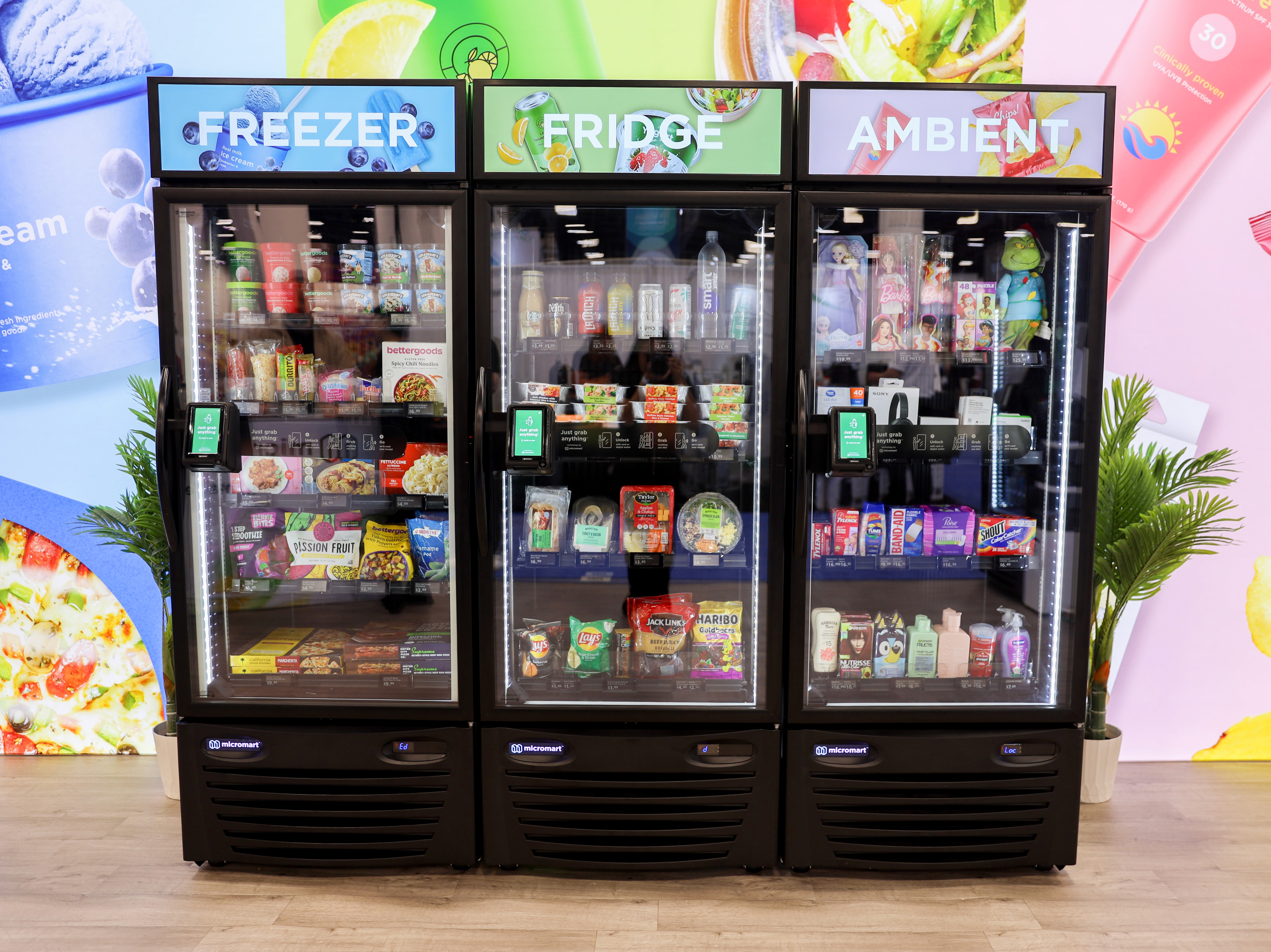
The backbone of this system is the kiosk. These aren't clunky old computers; they are sleek, iPad-style interfaces that handle inventory tracking and payments instantly.
Most modern systems also include a mobile app. This allows users to reload their accounts, check what is in stock before leaving their desk, and even pay directly from their phone without touching the kiosk.
Inventory Management and Revenue Sharing
Behind the scenes, these markets are smart. The kiosk tracks every sale in real-time. When stock gets low, the operator gets an alert. This data-driven approach means the market is restocked with exactly what people are buying.
Unlike vending machines that might be visited once a week, micromarkets often require daily attention to ensure fresh food doesn't spoil and displays look tidy. For the business owner, this is usually hands-off. The provider manages the inventory, and in many cases, shares a percentage of the gross revenue with the location.
Benefits of Micromarkets for Offices, Apartments, and More
The versatility of micromarkets allows them to succeed where vending machines fail. In apartment complexes, they serve as a 24/7 convenience store for residents who need milk or toothpaste late at night. In offices, they become the lunch spot.
Key benefits include:
Healthier Options: You can stock salads, fruit, and yogurt that would spoil in a standard machine.
Larger Products: They can sell gallon jugs, full meal kits, or non-food items like phone chargers.
High Uptime: If one cooler breaks, the rest of the market still works. If a vending coil jams, the whole machine is often out of order.
Challenges in the Transition
It is not all smooth sailing. Moving from a locked box to open shelves introduces new risks that business owners need to acknowledge. The biggest concern is usually shrinkage—the industry term for theft.
Common hurdles include:
Theft Risk: Without a physical barrier, some items may walk away unpaid. This requires cameras and monitoring.
Maintenance: Open coolers and coffee stations require more cleaning than a sealed vending machine.
Space Requirements: You need power outlets, internet connections, and enough wall space for the layout.
Best Practices for Implementing Micromarkets
If you are thinking about upgrading, don't just shove a market into a closet. Success depends on planning and layout. The goal is to create a flow that feels natural and inviting.
Assessing Your Space and Needs
Not every location is right for a micromarket. You generally need a "captive audience" of at least 100-150 people to support the fresh food waste. If you have fewer people, a hybrid model or smart vending machine might be better.
Choosing a Managed Service Provider
This is the most critical decision. You want a partner who handles everything—design, installation, restocking, and technology. Look for providers who offer revenue sharing and zero upfront costs.
Ask these questions:
How often do you restock fresh food?
What is your policy on theft and shrinkage?
Do you provide the security cameras?
Optimizing for User Experience
A micromarket should feel like a perk, not a utility. The layout should be intuitive. Place high-demand items like drinks and sandwiches at eye level.
Clear Signage: Label sections clearly (e.g., "Breakfast," "Healthy Snacks").
Frictionless Payment: Ensure the kiosk accepts Apple Pay and Google Pay.
Feedback Loops: Use a suggestion box or app feature so users can request specific products.
Common Mistakes When Replacing Vending Machines
The biggest mistake businesses make is underestimating the security aspect. You cannot place a micromarket in a public lobby open to the street; it will be emptied overnight. These systems work best in secure, badge-access areas.
Another error is ignoring the product mix. If you replace a vending machine but only stock the same chips and sodas on open shelves, you have missed the point. You must introduce fresh food and premium items to justify the upgrade and engage employees.
The Future Outlook: Micro Dominance or Hybrid Models?
We are heading toward a future where the line between vending and retail blurs completely. While micromarkets are dominant in large offices, hybrid models are emerging for mid-sized spaces.
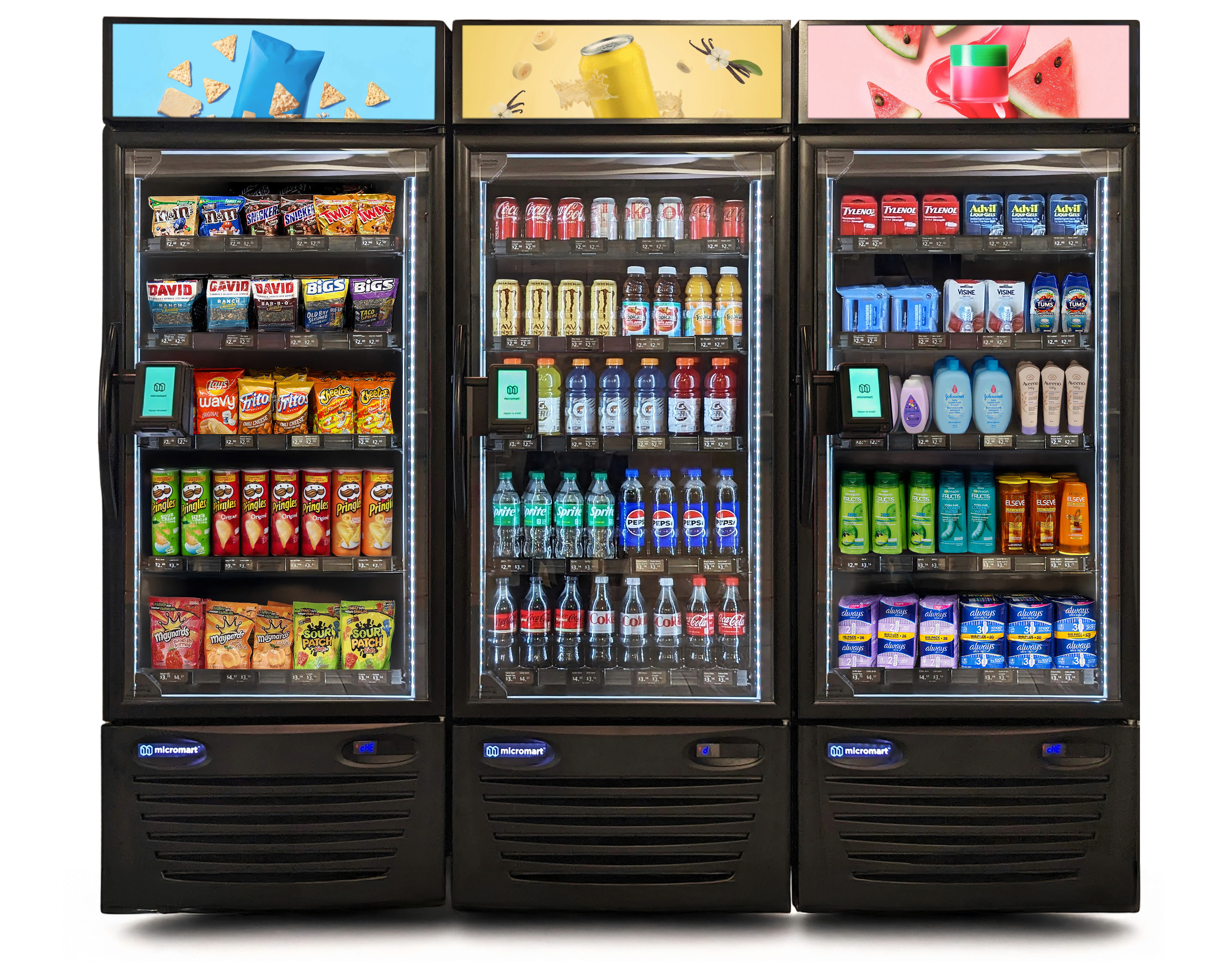
These setups use a "smart cooler" (which unlocks with a credit card) alongside a coffee station. This offers the security of vending with the product variety of a market.
Conclusion: Is It Time for Your Business to Upgrade?
The data is clear: the era of the coin-operated snack machine is fading. For businesses that want to modernize their facilities, improve employee satisfaction, and potentially earn revenue, micromarkets are the superior choice.
If you have the space and the headcount, the switch is a no-brainer. It costs nothing to install with the right partner, and the daily impact on workplace culture is immediate. The breakroom is the heart of the office—it deserves an upgrade.
Frequently Asked Questions
How much does it cost to install a micromarket?
Most providers offer zero upfront costs through revenue-sharing models, where they install, stock, and maintain the market in exchange for a percentage of sales. Expect setup in 1-2 weeks for offices with 150+ employees.
What security measures prevent theft in micromarkets?
High-definition cameras with AI monitoring, license plate recognition, and badge-access restrictions reduce shrinkage to under 2%. Providers often include 24/7 remote surveillance and theft insurance in contracts.
Can micromarkets operate in small offices with under 100 people?
For smaller spaces, hybrid models combining smart coolers and vending work best, generating 20-30% more sales than vending alone. Full micromarkets need 100+ daily users to minimize fresh food waste.
How often are micromarkets restocked compared to vending machines?
Micromarkets require daily restocking for fresh items like salads and yogurt, versus weekly for vending. Automated inventory alerts ensure operators replenish high-demand products efficiently.
What payment methods do micromarket kiosks accept?
Kiosks support credit/debit cards, Apple Pay, Google Pay, and mobile apps for account-based payments. Contactless options process transactions in under 5 seconds for seamless checkout.