How Much Space Do You Need for a Vending Machine in an Apartment Building?
Exact dimensions, ADA clearances, and the best lobby and laundry room spots for fitting a vending machine into an apartment building.
Introduction to Vending Machine Space Needs in Apartment Buildings
Adding a vending machine to an apartment complex is a smart way to boost resident satisfaction, but figuring out where it fits can be tricky. You might think you just need a spot the size of a refrigerator, but there is more to it than that. If you place a machine in a tight corner without planning, you could block fire exits, violate accessibility laws, or make it impossible to restock.
Space planning is the first step to a successful amenity program. You need to account for the machine's footprint, the room required for the door to swing open, and the airflow needed to keep the cooling system running. Whether you manage a high-rise or a garden-style community, understanding these spatial needs ensures your new amenity adds value rather than clutter. Compact machines can fit in as little as 10-15 square feet and start generating $300+ in monthly revenue.
Types of Vending Machines and Their Typical Dimensions
Vending machines come in various shapes and sizes, so there is usually a solution for every floor plan. However, you cannot guess the dimensions. Standard machines are large, heavy pieces of equipment that require specific clearances to operate correctly. Knowing the exact measurements helps you identify the right alcove or wall space before you commit to an installation.
Generally, a standard machine footprint is substantial. Typical vending machine dimensions are about 80" x 40" x 35", though this varies by manufacturer and model.
Compact Snack and Beverage Machines
If your lobby or hallway is tight, compact machines are a lifesaver. These units are designed specifically for locations where floor space is at a premium but resident demand is still high.
For example, the Seaga SM2300 features a compact design suitable for smaller apartment spaces while still offering wide product options (VendingLocator). These machines often combine snacks and drinks in one cabinet, saving you the trouble of finding room for two separate units.
Full-Size Combo Units
Full-size combo units are the workhorses of the industry. They hold a higher volume of inventory, which means they don't need to be restocked as often. These are best for buildings with a high resident count where a smaller machine would empty out in a day.
You typically need a dedicated wall for these. They are often deeper and wider than compact models. If you have a spacious mailroom or a dedicated break area, a full-size combo unit is usually the most efficient choice for maximizing revenue per square foot.
Smart Vending and Micro Market Solutions
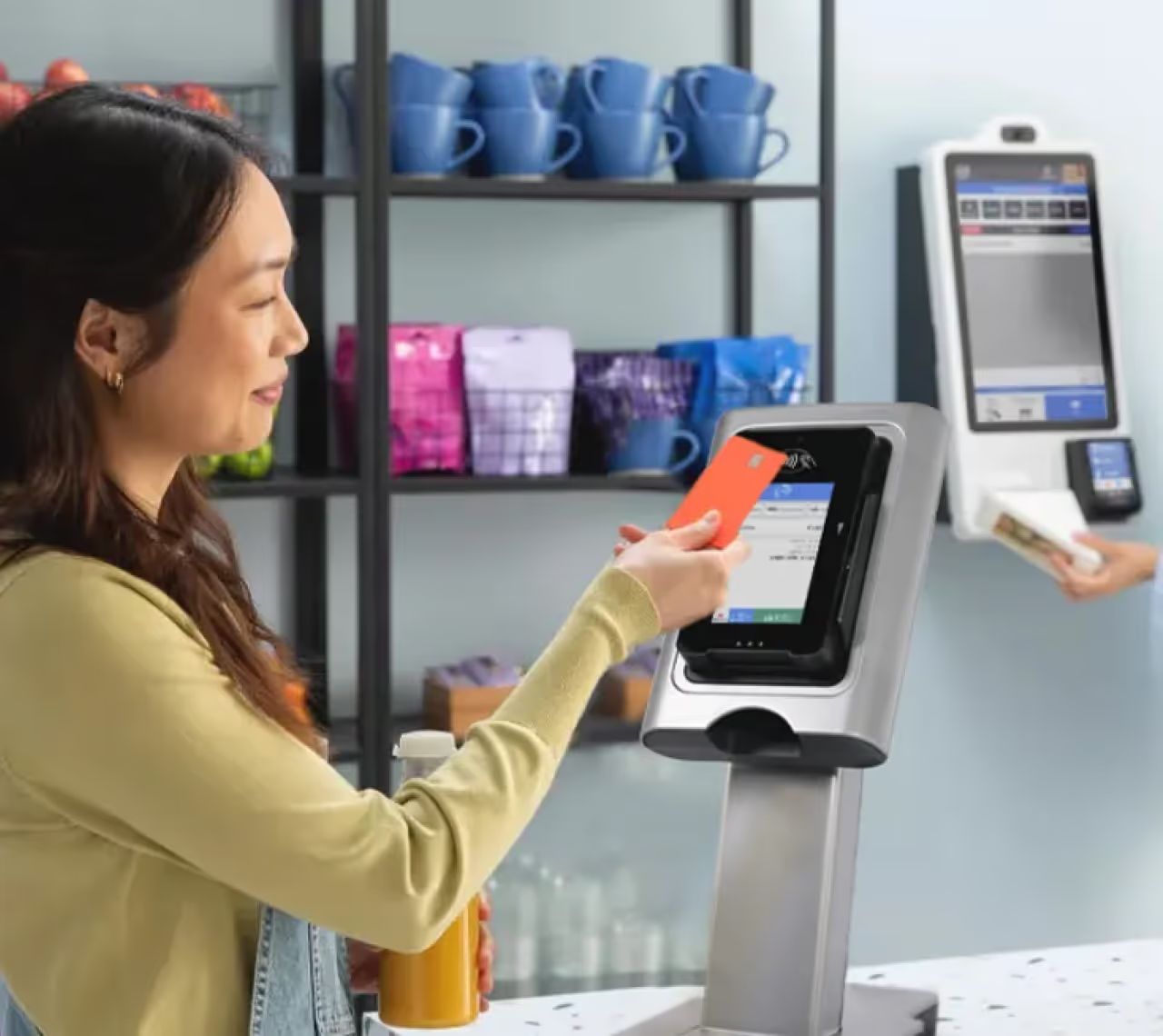
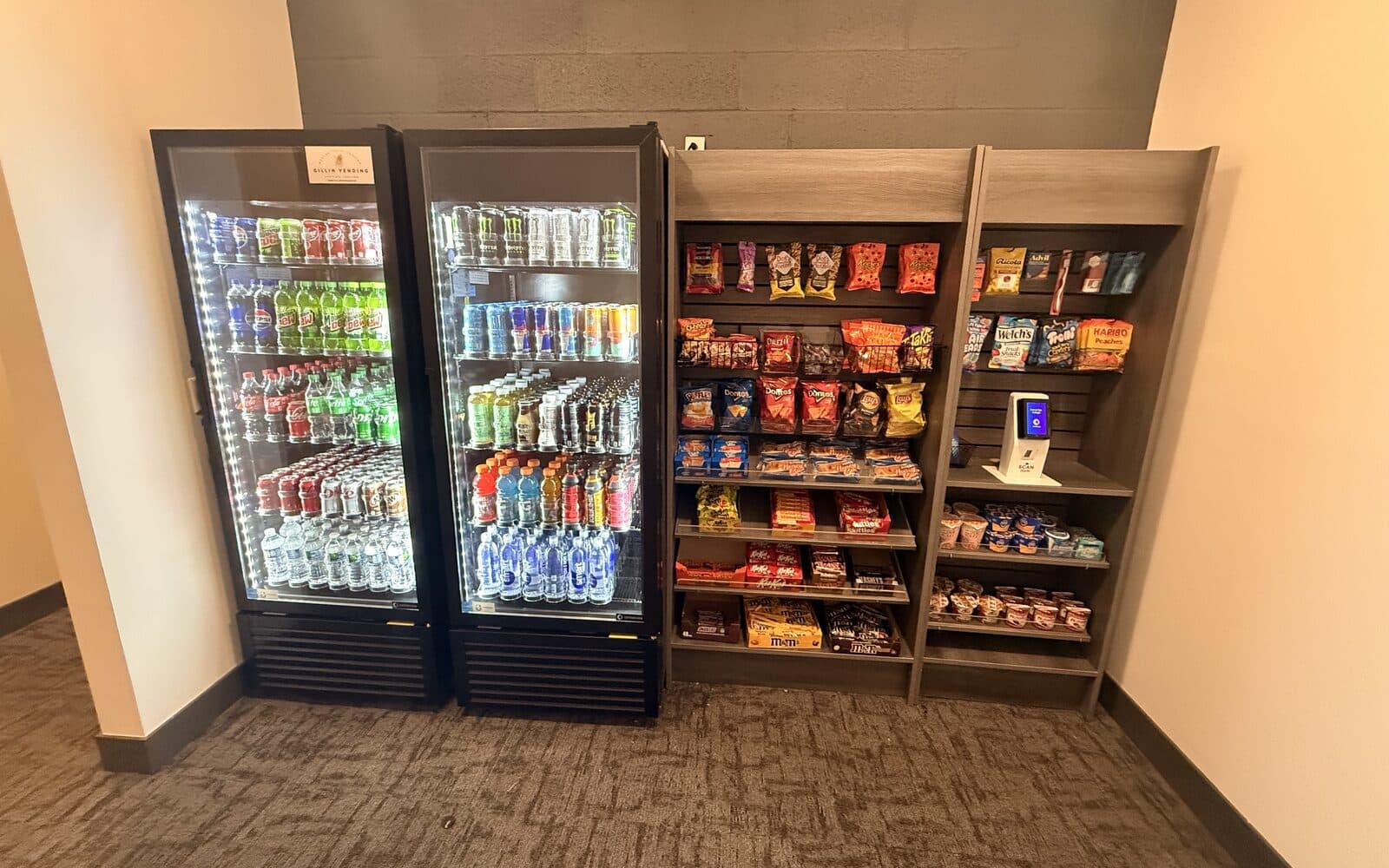
Smart vending machines and micro markets are different from traditional glass-front boxes. A smart fridge might take up less depth but requires a reliable internet connection. Micro markets are modular, meaning they can be arranged to fit odd-shaped rooms.
These solutions often feel more like a small convenience store than a vending machine. While they might require more linear wall space for shelving and coolers, they are flexible. You can often split the components up — placing a snack rack on one wall and a beverage cooler on the adjacent wall.
Minimum Space Requirements for Safe Installation
Safety and functionality are just as important as the physical dimensions of the box. You cannot simply wedge a machine between two walls and walk away. Service technicians need room to work, and the machine needs room to breathe. If the space is too tight, you risk overheating the compressor or making it impossible to load new products.
At a minimum, you need enough room for the plug and for the door to swing fully open during stocking and servicing. Without this buffer zone, your machine becomes a permanent fixture that is difficult to maintain.
Essential Clearances and Accessibility Considerations
Beyond the physical box, you must consider the "invisible" space around the machine. This includes the area required for a person to stand in front of it, make a selection, and retrieve their item. In the United States, this also means adhering to strict legal standards regarding accessibility.
Ignoring these clearances can lead to fines or complaints. A good rule of thumb is to ensure a clear floor space of 30x48 inches in front of the vending machine to allow for a forward or parallel approach by a person in a wheelchair.
Door Swing and Loading Access
The front door of a vending machine is heavy and wide. When a route driver comes to restock snacks or fix a coin jam, they need to open that door all the way — usually 90 to 180 degrees.
If you place the machine too close to an opposing wall or a door frame, the driver cannot open it. This makes restocking impossible. Always measure the depth of the machine plus the width of the door to ensure there is enough clearance for full operation.
Electrical Outlet and Ventilation Space
Machines need power, and they generate heat. You cannot push a refrigerated unit flush against the back wall; it needs about 4 to 6 inches of gap for airflow. Without this, the compressor will burn out.
You also need a proper electrical outlet within reach (usually 6 feet) so you aren't running extension cords across the floor, which is a trip hazard. Ensure the location has:
- A dedicated 115v outlet
- Adequate rear ventilation
- Secure surroundings
ADA-Compliant Pathways
Federal law requires that common areas in apartment buildings be accessible to everyone. This applies to your vending machines, too. You cannot place a machine in a spot that blocks a hallway or makes a path too narrow for a wheelchair.
Specifically, the accessible route to the vending machines needs a minimum 36-inch width, and operable parts (like buttons and card readers) must be between 15 and 48 inches above the floor.
Prime Locations in Apartment Buildings for Optimal Space Use
Finding the right spot is about balancing space availability with resident traffic. You want the machine to be visible but not in the way. The best locations are natural stopping points where residents already gather or pass through daily.
When selecting a spot, consider these factors:
- Security: Areas with cameras or high visibility to limit theft.
- Demographics: Middle-class or higher neighborhoods often see better sales.
- Density: Buildings with a high number of rented units.
- Competition: Low proximity to outside convenience stores.
High-Traffic Lobbies and Entrances
The lobby is often the most profitable spot because every resident passes through it. It is the first thing they see when they come home and the last thing they see when they leave.
However, lobbies can be crowded. Ensure the machine is tucked into an alcove so it doesn't disrupt the flow of people moving in and out.
Laundry Rooms and Utility Areas
Laundry rooms are fantastic locations because residents are a captive audience. They are often stuck there for 30 to 60 minutes waiting for a cycle to finish. This boredom often leads to snack purchases.
This is also a practical space to sell non-food items. Offering essentials like laundry detergent pods or dryer sheets can save residents a trip to the store. Since these rooms are utility-focused, aesthetics are often less of a concern than in a main lobby, giving you more flexibility with placement.
Amenity Spaces Like Gyms and Pool Decks
Placing machines near amenity spaces enhances the resident experience. A cold drink after a workout is an easy sell.
Vending machines near fitness centers offer hydration and protein snacks, which perform very well. However, be careful with outdoor or rooftop locations. You should generally avoid rooftop gyms or pools due to less consistent traffic and potential weather exposure.
Factors Affecting Space Allocation in Multi-Tenant Buildings
Every building is different, and the "perfect" spot depends on your specific layout and resident needs. In a multi-tenant environment, you are balancing the needs of many different people.
Key factors to consider include:
- Negotiations: Securing prime locations often requires discussion with property managers.
- Foot Traffic: Identifying where people actually walk, not just where there is an empty wall.
- Maintenance: Ensuring the spot allows for easy cleaning and restocking.
- Demographics: Adapting the machine size and product mix to the residents (e.g., students vs. families).
Best Practices for Measuring and Planning Vending Space
Before you order a machine, get out the tape measure. It is expensive and frustrating to return a machine because it doesn't fit through the front door or sticks out too far into the hallway.
Start by measuring the width, depth, and height of the potential space. Then, measure the path the machine must travel to get there — including elevator doors and tight corners. Measure available space and choose a machine that fits comfortably to avoid cramping the area.
Common Mistakes When Estimating Vending Machine Space
Even experienced property managers make mistakes when planning for vending. The most common error is forgetting about the power source. If you place a machine on a wall with no outlet, you will have to pay for expensive electrical work later.
Other common pitfalls include:
- Blocking Exits: Placing machines in fire escape routes.
- Ignoring Data: Putting smart machines in basements with no cell signal.
- Overlooking Noise: Placing loud cooling units next to ground-floor apartments.
- Underestimating Depth: Forgetting that the plug adds inches to the depth.
Maximizing Revenue with Hands-Off Vending Solutions from Modern Amenities
Figuring out dimensions, ADA compliance, and electrical requirements can be a headache. That is why many property managers choose a fully managed service. Modern Amenities handles the entire process for you, from measuring your space to selecting the perfect machine.
We specialize in smart vending and micro markets that fit seamlessly into lobbies, gyms, and apartments. Our model is 100% hands-off for you. We install the equipment, stock the products, and handle all maintenance. You simply provide the space and power, and we share the revenue. It's the easiest way to add a premium amenity without doing the heavy lifting.
Conclusion
Allocating space for a vending machine requires a little planning, but the payoff is worth it. By understanding the dimensions, respecting accessibility laws, and choosing high-traffic locations, you can turn an empty corner into a valuable amenity. Whether you choose a compact unit for a laundry room or a smart market for the lobby, the right fit makes all the difference. If you want to skip the measuring tape and logistics, partnering with a managed service like Modern Amenities ensures you get the right solution for your building with zero hassle.
Frequently Asked Questions
How much weight can apartment floors support for vending machines?
Standard apartment floors handle 40-100 psf live loads, sufficient for most vending machines weighing 400-800 lbs. Verify with a structural engineer for older buildings to prevent floor damage.
What are the delivery door size requirements for installing a vending machine?
Most vending machines need at least 36-inch wide doors for delivery; elevators should be 42x48 inches minimum. Measure hallways and turns in advance to ensure the unit fits without disassembly.
How often do vending machines need restocking in apartment buildings?
Compact machines restock weekly; full-size combo units every 1-2 weeks for 100-200 residents. High-traffic spots like lobbies may require twice-weekly visits based on sales data.
Are permits or approvals needed for vending machines in apartments?
Yes, obtain property manager approval, check local health codes, and ensure electrical inspections. No general vending license required in most US areas, but fire marshal review may apply for exit proximity.
How much does electricity cost to run a vending machine monthly?
Refrigerated combo units use 5-10 kWh daily, costing $10-25 monthly at $0.13/kWh average US rate. Non-refrigerated snack machines cost under $10, depending on usage and location climate.